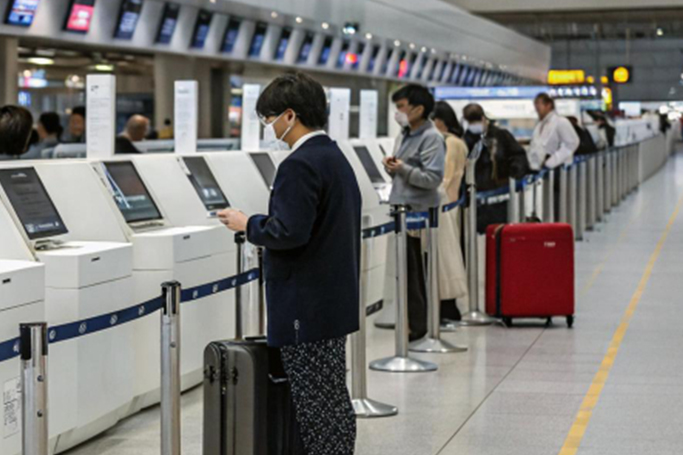
For years, “self-service” in hospitality meant one thing: a kiosk in the corner.
It was often treated as an add-on — something operators installed to reduce lines during peak hours or cut a bit of labor cost.
But guests never saw it as transformative.
And operators rarely saw it as strategic.
That mindset no longer works.
Today, self-service isn’t a feature. It’s infrastructure.
It’s not about replacing a cashier with a screen. It’s about redesigning how hospitality works altogether — how guests order, how staff operate, and how venues generate revenue.
That’s the difference between incremental technology and systemic change.
And it’s exactly where Servy’s philosophy stands apart.
Servy isn’t building isolated tools. It’s building a connected hospitality ecosystem designed to make service feel seamless — for guests and operators alike.
Because in modern hospitality, the best technology isn’t visible.
It simply works.
Hospitality Isn’t Slowing Down — It’s Speeding Up
Across US airports, restaurants, and large venues, guest behavior has fundamentally changed.
People move faster.
They expect:
– Immediate access
– Instant payments
– Digital convenience
– Zero waiting
The old service model — walk up, wait, order, wait again — feels outdated.
In environments like airports or stadiums, it’s not just inconvenient. It’s impractical.
A passenger rushing to board doesn’t have 15 minutes to stand in line.
A fan doesn’t want to miss a key play for a drink.
A lounge guest doesn’t want to leave their seat just to pay a bill.
Hospitality has to adapt to how people actually behave.
Servy’s vision starts with this reality: Service should come to the guest — not the other way around.
Moving Beyond “Self-Service” as a Cost-Cutting Tool
Historically, self-service technology has often been framed around cost reduction:
– Fewer staff
– Fewer registers
– Lower overhead
While efficiency matters, this perspective is too narrow.
When self-service is treated only as a labor-saving tactic, it often results in clunky, disconnected experiences.
Guests feel like they’re being pushed to machines instead of being served better.
Servy approaches self-service differently.
The goal isn’t: “How do we remove staff?”
It’s: “How do we remove friction?”
There’s a critical difference.
Removing friction improves both experience and revenue.
Removing people rarely does.
Servy’s philosophy centers on enhancing hospitality, not replacing it.
Technology should handle transactions so people can focus on service.
A Seamless Guest Journey, Not Isolated Touchpoints
One of the biggest gaps in traditional hospitality tech is fragmentation.
Operators often deploy:
– One system for kiosks
– Another for mobile ordering
– Separate POS systems
– Separate analytics tools
– Disconnected loyalty programs
Each tool works individually.
But the guest experience becomes inconsistent.
From the guest’s perspective, this feels messy.
Different interfaces. Different flows. Different rules.
Servy’s approach is different.
Instead of layering tools on top of each other, Servy connects everything under one unified platform.
That means:
– One ordering ecosystem
– One integration layer
– One payment system
– One source of truth for data
Guests don’t think in terms of “channels.”
They think in terms of convenience.
The experience should feel continuous, not compartmentalized.
Designing for Where Guests Actually Are
Traditional hospitality assumes guests will come to a counter.
Modern hospitality recognizes guests are already somewhere else.
They’re:
– Sitting at a gate
– Relaxing in a lounge
– Walking through a terminal
– Watching a game
– Waiting at a table
Servy’s vision flips the model.
Instead of building service around fixed counters, it distributes service across the entire venue.
This is why Servy’s ecosystem includes:
Device-based ordering
Guests use their own phones to order instantly — no app downloads required.
Self-service kiosks
High-throughput stations that reduce congestion where needed.
Digital marketplaces
One interface to browse and order from multiple outlets.
Integrated analytics
Real-time insights to continuously optimize operations.
Together, these touchpoints create hospitality that adapts to the guest’s location — not the other way around.
Service That Feels Invisible
The best hospitality experiences often go unnoticed.
Think about the last time something “just worked.”
No delays. No confusion. No effort.
That’s the benchmark Servy aims for.
When self-service is done right:
Guests don’t think: “I used a system.”
They think: “That was easy.”
This subtlety matters.
Because the goal isn’t to showcase technology.
It’s to remove barriers between intention and action.
Hungry → order → eat
Thirsty → order → drink
No friction in between
That’s seamless hospitality.
Empowering Staff, Not Replacing Them
Another core part of Servy’s philosophy is how technology impacts teams.
Hospitality is still a people-first industry.
But asking staff to spend most of their time:
– Taking orders
– Swiping cards
– Printing receipts
isn’t the best use of their skills.
It also creates stress during peak periods.
Servy’s approach shifts those repetitive tasks to digital systems so staff can focus on what humans do best:
– Food quality
– Speed of preparation
– Guest interaction
– Problem-solving
– Service excellence
This doesn’t reduce hospitality.
It improves it.
When staff aren’t overwhelmed by transactions, service feels more attentive and personal.
Built for Complex, High-Volume Environments
Servy didn’t design its platform for small, low-traffic cafes.
It was built specifically for complex, high-volume environments like:
– Airports
– Lounges
– Stadiums
– Hotels
– Enterprise food service operations
These environments face unique challenges:
– Massive demand spikes
– Limited space
– Multiple independent vendors
– Complex POS integrations
– High guest expectations
A single kiosk or app can’t solve those problems.
They require an integrated system that orchestrates ordering, payments, fulfillment, and data across many stakeholders.
Servy’s platform approach is built to scale with that complexity — connecting concessionaires, operators, and guests through one ecosystem.
Data as a Foundation, Not an Afterthought
Another defining element of Servy’s vision is visibility.
Modern hospitality decisions shouldn’t rely on guesswork.
Operators need:
– Real-time performance insights
– Sales trends
– Guest behavior patterns
– Revenue assurance
– Outlet comparisons
Servy integrates analytics directly into its ecosystem so every transaction informs smarter decisions.
Tools like centralized dashboards and retail analytics solutions help operators see what’s happening across their entire venue — not just at one counter.
Better data leads to:
– Smarter staffing
– Optimized menus
– Improved layouts
– Stronger profitability
Seamless hospitality isn’t only about guest experience. It’s also about operational intelligence.
Why Servy’s Philosophy Matters Now
In 2026 and beyond, hospitality leaders face growing pressure to:
– Increase non-aeronautical revenue
– Manage labor shortages
– Improve guest satisfaction
– Modernize outdated systems
– Scale efficiently
Point solutions won’t be enough.
Disconnected tools create complexity.
Operators need unified systems that address the entire journey.
That’s the foundation of Servy’s vision.
Not self-service for the sake of automation.
But seamless hospitality where:
– Guests move freely
– Staff work efficiently
– Operators gain visibility
– Revenue opportunities expand naturally
Final Thoughts
Self-service used to mean doing more with fewer people.
Today, it means delivering better experiences with smarter systems.
That’s a fundamental shift.
Servy’s approach recognizes that hospitality doesn’t need less humanity — it needs less friction.
By connecting mobile ordering, kiosks, marketplaces, and analytics into one cohesive platform, Servy is redefining what self-service can be:
Not a machine in the corner.
But an invisible layer that makes every interaction easier.
Because when technology truly enhances hospitality, guests don’t notice it.
They simply enjoy the experience.